
Will Your Product Label Actually Stick?
Updated: Jul 26
A label can look perfect on screen and still fail on the product.
Edges may lift. Labels can wrinkle when a bottle is squeezed. Refrigerated products may develop condensation. A removable label may leave behind adhesive residue.
The solution is not simply to choose the strongest adhesive. The right adhesive must match the container, application conditions, storage environment and intended customer experience.
At CETTEC, we recommend evaluating the actual product container before finalizing the label material and adhesive.

Start With the Container
The same adhesive will not perform equally well on every surface.

Glass jars and bottles
Glass is generally label-friendly because it is smooth and provides a reliable surface for many adhesives.
However, consider how the container will be used:
Will it be refrigerated?
Will condensation form?
Is the glass textured or embossed?
Should the customer be able to remove the label and reuse the jar?
A standard permanent adhesive may work well for sauces, beverages, candles and cosmetic products. Reusable packaging may benefit from a removable or wash-off option.
Rigid plastic containers
Plastic is not one universal surface.
PET, HDPE and other plastics can look similar but behave differently. Some plastics are more difficult for adhesives to grip, especially when the surface is slightly textured or has manufacturing residue.
These applications may require a higher-tack adhesive. The container should also be clean and free from oil, dust or moisture before labelling.
Squeeze bottles and flexible packaging
A label on a squeeze bottle must move with the container.
Repeated flexing can cause a rigid label to wrinkle, crack or lift at the edges. Condiment bottles, cosmetic tubes and flexible containers often require:
A flexible label material
An adhesive that maintains its bond as the package moves
The label material and adhesive must be selected together. A stronger adhesive cannot always compensate for a material that is too rigid.
Consider the Product Environment
The container is only part of the decision. The label must also survive how the product is stored, transported and used.
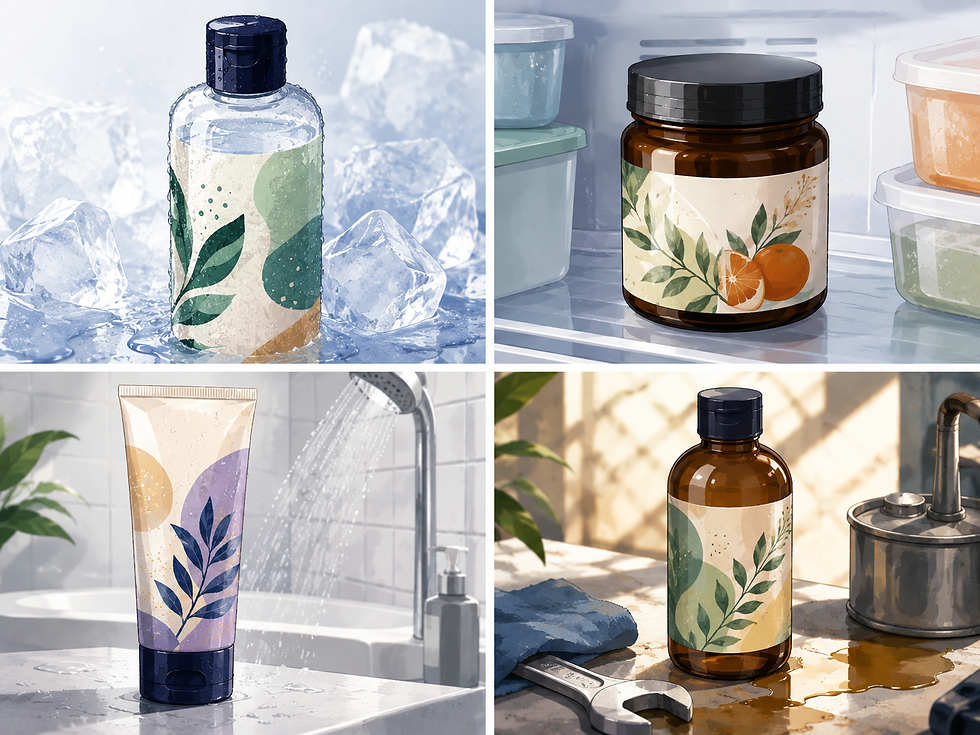
Refrigeration and freezing
Two temperatures matter:
The temperature when the label is applied
The temperature where the product will be stored
A label may perform well when applied to a clean, room-temperature container and then refrigerated. Applying it directly to a cold or damp container is more difficult because condensation and low temperature can reduce the initial bond.
Products labelled in refrigerated areas or moved quickly into a freezer may require a cold-temperature or freezer-grade adhesive.
Water and condensation
A waterproof label material does not automatically make the entire label suitable for wet conditions.
The printable material, protective finish and adhesive must all match the application.
Consider whether the product will be:
Stored in an ice bucket
Handled with wet hands
Used in a shower
Wiped or washed regularly
Exposed to condensation
Testing should reproduce these real conditions.
Oil, chemicals and outdoor use
Automotive products, cleaners, industrial containers and outdoor equipment may be exposed to oil, solvents, sunlight, abrasion and temperature changes.
These products may require a durable synthetic material, protective lamination and a specialized adhesive.
This should be discussed before production, not after the first batch begins to fail.
Permanent Is Not Always Better
The correct adhesive depends on what the label is expected to do.

Permanent adhesive
Used when the label should remain on the product throughout its useful life.
Common applications include:
Food and beverage packaging
Cosmetics and personal-care products
Product identification
Shipping and inventory labels
High-tack adhesive
Used for more difficult surfaces, including some plastics, textured containers and tight curves.
High tack should not be selected automatically. It may be unnecessary on smooth glass and can make removal more difficult.
Removable adhesive
Designed to come away more cleanly without damaging the item or leaving excessive residue.
Common applications include:
Promotional stickers
Temporary instructions
Retail pricing
Reusable containers
Short-term identification
Repositionable adhesive
Allows the label to be lifted and adjusted during application. This can help when larger labels must be carefully aligned.
Cold-temperature adhesive
Designed for products applied or stored in cold environments. The actual application and storage temperatures should always be provided to the printer.
Tamper-evident labels
Used when the label must show that a package, seal or product has been opened. Depending on the construction, the label may tear or reveal a hidden message when removed.
Five Questions to Answer Before Ordering
You do not need to become an adhesive specialist. You do need to provide enough information for your printer to recommend a suitable construction.
1. What is the container made from?
Is it glass, PET, HDPE, cardboard, metal or another material?
2. What is the surface like?
Is it smooth, textured, curved, flexible or very small in diameter?
Tight curves and flexible containers place more stress on the label edges.
3. At what temperature will the label be applied?
Will the container be at room temperature, refrigerated or frozen?
4. What will the finished product experience?
Will it encounter moisture, oil, chemicals, sunlight, abrasion, refrigeration or repeated squeezing?
5. Should the label stay permanently or come off cleanly?
The removal experience can be just as important as the initial bond.
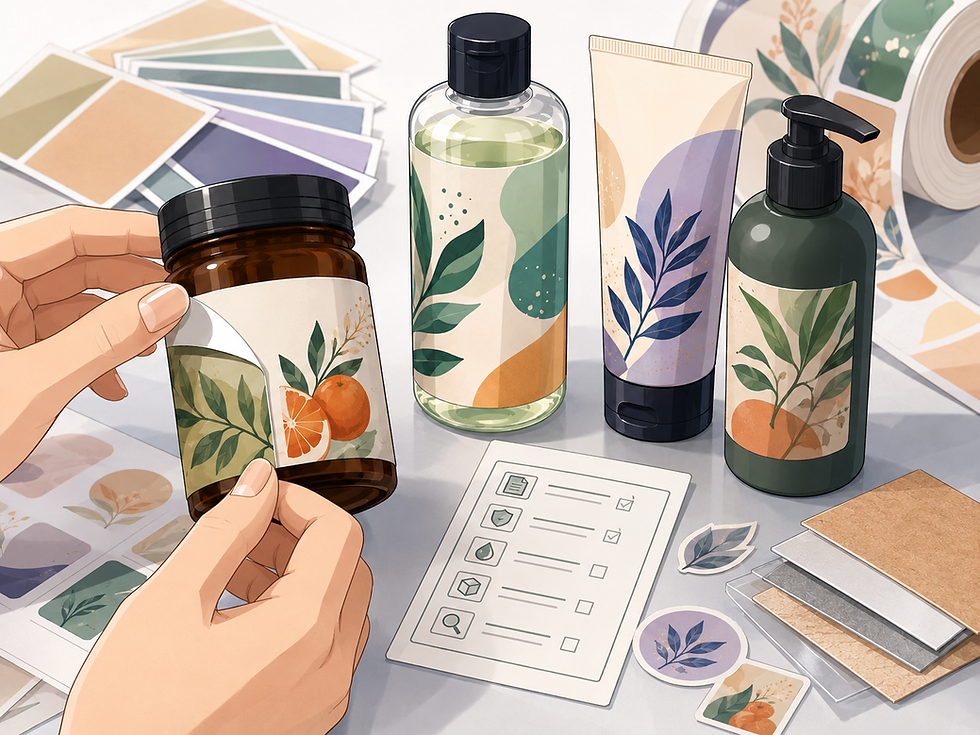
Test the Actual Product
A test on the real container is more valuable than relying only on a material specification.
Use the same container, filling process, storage conditions and handling that the finished product will experience. Allow the adhesive time to build its bond, then check for:
Lifting edges
Wrinkles or bubbles
Movement around curves
Failure after refrigeration
Damage during squeezing
Residue after removal
A small production test can identify problems before they affect an entire order.
The Right Label Starts Before Printing
Colour and design attract attention. The material and adhesive determine whether the label remains in place after the product leaves the shelf.
When requesting custom labels, provide your printer with:
A sample container
The product’s storage conditions
The application temperature
The intended label size
The expected order quantity
Whether the label should be permanent or removable
CETTEC Printing produces custom roll labels for growing businesses in Vancouver and across British Columbia. Bring or send us a sample container, and we can help identify a practical label material and adhesive combination to test before production.
Choosing the right material and adhesive is part of planning reliable custom roll label printing for your product.


